Advantages of playing with real money in casinos

Today, the online and offline gambling industry in Switzerland is better regulated than in many other European countries and it is more relaxed about gambling compared to previous years. Here are the best benefits:
- Experience the thrill of gambling for real money on the internet
- Win at the gaming tables or jackpot machines
- Play at the live dealer tables with a real croupier
- Play for real money
- Play easily on the go with real money mobile casino apps
By the way, if you are already an experienced player and looking for new opportunities, our team has made a review for you new online casinos !
How we rate the best online casinos with real money
- 18+
- Terms and conditions apply
- Advertising Policies
| Online Сasino | Rating | Bonus | Play | ||
|---|---|---|---|---|---|

|
MyStake
5
|
150% up to $200! |


|
||

|
GoldenBet
5
|
100% up to 500£ |
|
||

|
Freshbet
5
|
Casino Welcome Bonus Up to 1500£! |
|
||

|
Red Lion
4.9
|
750% up to £/$/€3000! |
|
||

|
Lady Linda
4.9
|
300% up to £1000! |
|
||

|
SlotsnBets
4.9
|
Get 800% up to £ 3,000 |
|
||

|
Bets.io
4.8
|
Up to 1BTC+100FS |
|
||

|
Royal Oak
4.8
|
100% up to £/$/€1000! |
|
||

|
LTC
4.8
|
$15,000 SLOTS RACE |
|
||

|
Damslots
4.7
|
Welcome Casino Package up to £/$/€ 3000 |
|
Evaluating online casinos requires much more than re-evaluating what other sites say. To really understand the pros and cons of an online casino, you have to delve into the details. Below is a non-exhaustive look at some of the key elements we consider when evaluating the real money online casinos listed here
Customer Support Must Be Awesome – The speed with which online casinos respond to customer support requests is an important factor to consider. Nobody wants to wait days to get the status of their withdrawal requests or questions about bonuses.
All of the casino sites featured here already offer prompt responses within 24 hours of a submitted request for help. But not only speed is important. The quality of responses and the speed with which an account manager can resolve issues is a key factor. We also take this into account when evaluating the overall customer service quality of an online casino.
Excellent reputation among players and within the industry – you should definitely avoid casinos with many unresolved complaints filed against them. In most cases, no matter where in the world you are, there are many great options to consider. Our evaluation process looks at the number of relevant complaints filed against online casinos.
Wagering Requirements Must Be Realistic – Almost all service or product oriented online websites have terms and conditions that visitors and/or customers must comply with. Online casinos are not unfamiliar with these requirements and will often use these requirements to their advantage. I’m certainly not a fan of sites that use strict terms and conditions, particularly as part of their bonus terms.
Numerous games – a top-of-the-line component for large casinos – Thanks to a rapidly developing online gambling industry, the number of casino games in individual online casinos can often exceed thousands of games. Thanks to an API-driven model, this is now possible and allows developers to consolidate games developed by a variety of software providers into a single platform.
This means Swiss players can now gamble legally on numerous fully licensed sites (both domestic and overseas) and they can benefit from access to some of the best online casino games in the world at trusted gambling sites that are controlled by online casino reputable operators with a proven track record.
Legality of Online Casinos in Switzerland
Many players ask this question how legal and safe it is to play in an online casino for Swiss players. The German-language website Complete The Cycle clarifies this issue by stating that those casinos that have a valid license from the Swiss government are legal. However, online casino portals with well-known European licenses are also quite safe and reliable. Local players have everything to choose from.
Different types of welcome bonus
It is almost impossible to find an online casino that does not offer welcome bonuses to new users. This is the star strategy that companies use to attract the attention of new customers.
And in most cases it works very well. So much so that more and more people choose a particular casino depending on the size of the gift bonus. That’s because this promotion allows you to play without risking all your money.
Bonus with These are promotional offers that online casinos offer to new players who register on their platform. The prerequisite for this bonus is that the customer makes a first deposit. It should be noted that the size of the deposit bonus granted depends on the size of the player’s deposit.
Matched Bonus – The bonus is another variation of the welcome bonus. In this case, the amount allocated is not based on a percentage. That is, the operator will match the amount of money entered by the customer.
200%, 300% or 500% Bonus – You know that the most common percentage given by casinos as a welcome bonus is 100%. However, some casinos can exceed this percentage and reward their customers with 200%, 300% and even 500%.
About me
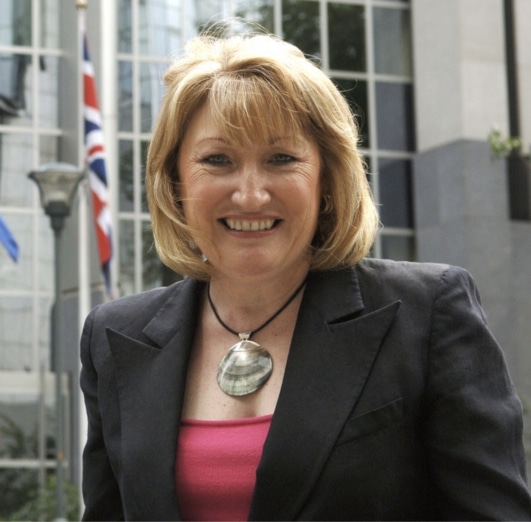
I have been the Labour Member of the European Parliament for the East Midlands since 2006 and I’m Labour’s Leader in Europe. Now I’m a casino expert.
In the European Parliament
I was elected as Leader of the European Parliamentary Labour Party in January 2009 and re-elected following the European elections in June 2009 & May 2014.
Committees
In the European Parliament I am a full member of the Environment, Public Health and Food Safety Committee. Responsibilities of the committee include environmental protection measures, regulating pharmaceutical and cosmetic products, and taking measures to ensure our food is safe and properly labelled.
I am a substitute member of the Committee on Employment & Social Affairs, which is responsible for employment policies, social policy and working conditions, vocational training and the free movement of workers and pensioners.
Other appointments
- Member of the Labour Party National Executive Committee and also attend Shadow Cabinet.
- Honorary Vice President of the Local Government Association and Vice President of the Labour Movement for Europe.
- Honorary associate of the British Vetinary association
- In the European Parliament I am a member of the MEPs against Cancer Forum.
My background
I was born in 1951 in Horden, Co. Durham.
I have an HNC in medical science, specialising in Clinical Chemistry (circa 1974); an HNC specialising in Haematology (circa 1984). I worked as a Medical Scientist from 1969-1987.
I was Parliamentary Assistant to Alan Meale, MP for Mansfield 1987-1990. From 1990-2006 I worked as a trade union officer for the GMB Union in the East Midlands.
My Labour Party experience includes: Regional Board member, East Midlands Labour Party (1990-present). Two terms as Chair of Regional Labour Party, most recently 2002-2004. In the GMB Trade Union: political officer (1990-2006); organiser (1992-1995); senior organiser (1995-2006). Secretary, East Midlands Trade Union and Labour Party Liaison Committee (1990-2006).
I was a County Councillor on Nottinghamshire County Council (1989-1993).
I was a Member of the TUC regional council from 1990-2004.